

In recent years, tourism has become one of the key drivers of economic development in Peru, directly contributing around 4% of GDP and more than 10% when considering its indirect effects. This growth, combined with the steady post-pandemic recovery, has renewed interest in strengthening the country’s connectivity, both internationally and domestically.
At the same time, tourism itself is evolving. Demand is shifting toward more complex travel patterns, with increasing interest in multi-destination itineraries and more diverse travel experiences. As a result, the need for a more efficient and better-balanced transport network. In this context, aviation plays a critical role, particularly in a country defined by challenging geography and limited ground transport infrastructure.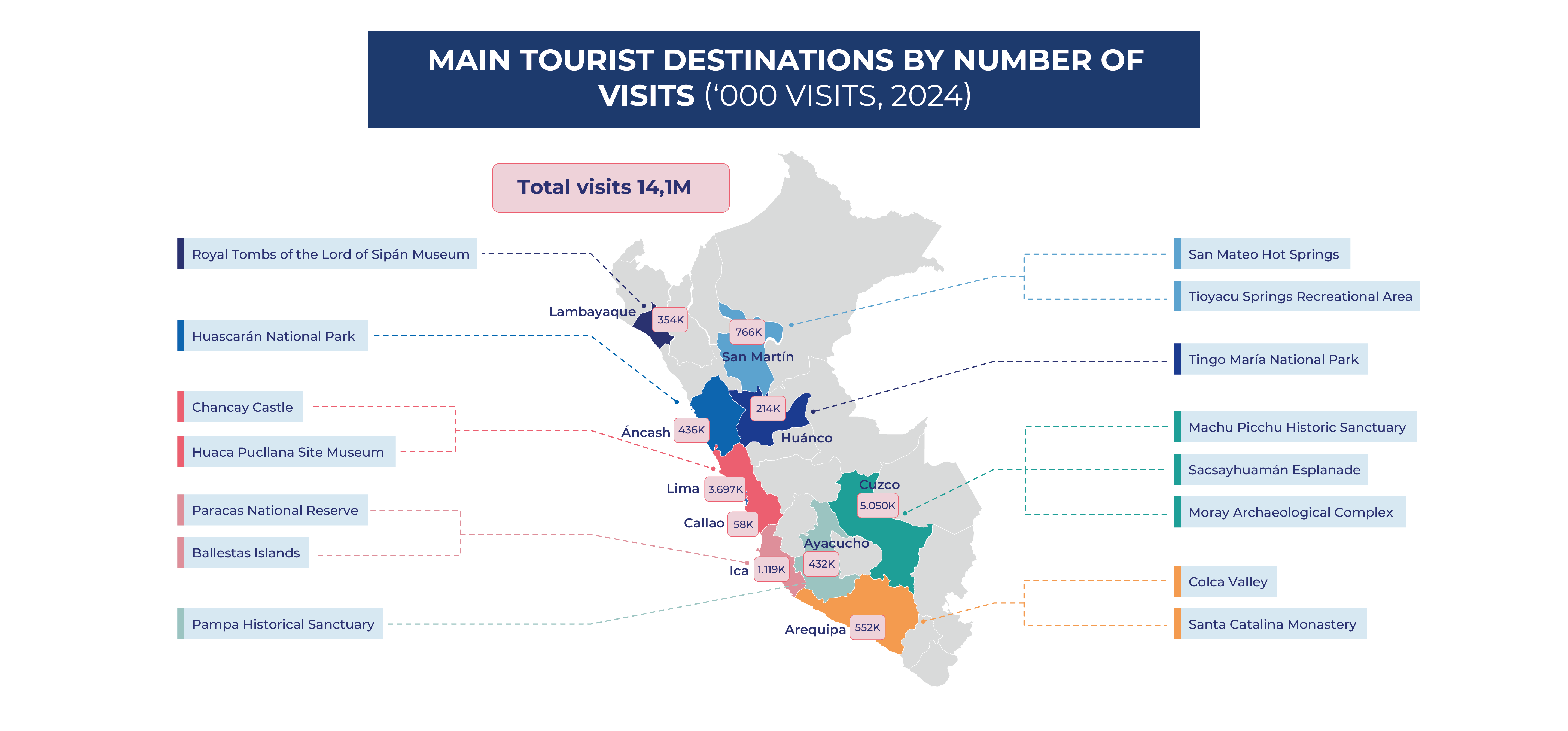
The structural challenge: a highly centralized network
Peru’s air transport system has a defining characteristic: a strong concentration in Lima, which serves as the primary gateway for both domestic and international traffic.
Today, around 92% of domestic capacity is routed through Lima, reflecting a highly centralized hub-and-spoke structure. While this model has been effective in the early stages of market development, it has also led to a growing structural dependency that is starting to constrain its evolution.
In practice, this means that a significant share of Peru’s traffic is not served through direct routes, but instead relies on connections via Lima. A large number of passengers use the airport as a transfer point, particularly for domestic travel, highlighting the extent to which the current network forces journeys through a single node, regardless of origin and destination.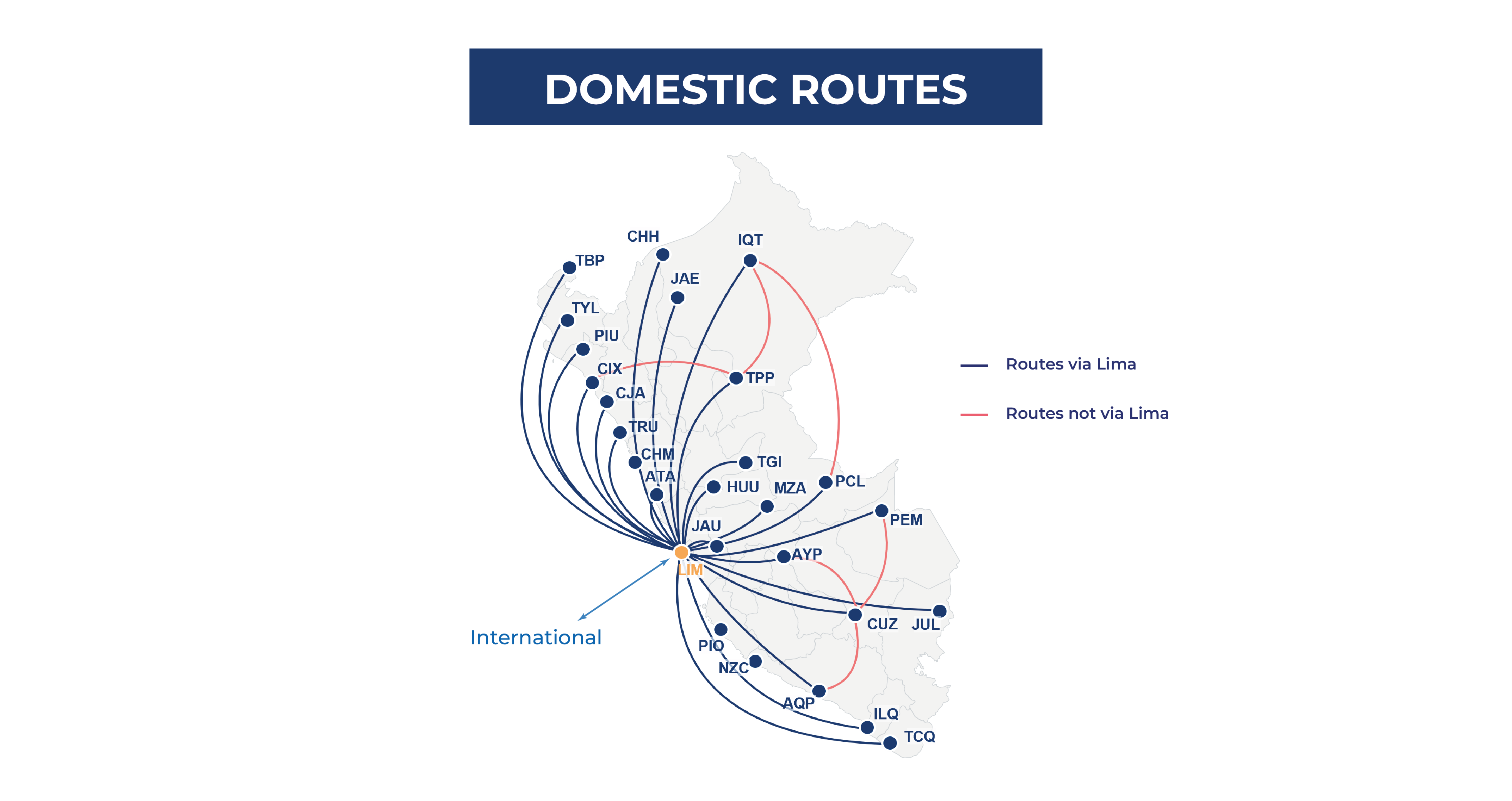
This has clear implications. On the one hand, it introduces inefficiencies into the passenger journey, longer travel times, additional stops, and increased friction, even on routes where sufficient demand exists to support direct services. On the other hand, it concentrates a large share of system activity in a single infrastructure.
As traffic continues to grow, this concentration increasingly translates into pressure on the main hub. Lima is no longer just the country’s primary gateway; its growing centrality means that any constraint or disruption can increasingly affect the broader network. What was once an operational advantage is beginning to show its limits in terms of resilience and scalability.
Beyond connectivity: impacts on efficiency and development
This model not only affects connectivity itself, but it also has direct implications for the overall efficiency of the air transport system.
From an operational perspective, reliance on the Lima hub results in indirect routings and longer-than-necessary travel times. However, the impact becomes particularly significant from an economic standpoint.
Fleet structure plays a central role here. The vast majority of domestic operations rely on narrow-body aircraft such as the A320 family, designed for high-density routes operated through the hub. The challenge arises when these aircraft are deployed on lower-demand regional routes, where the underlying traffic does not justify such capacity.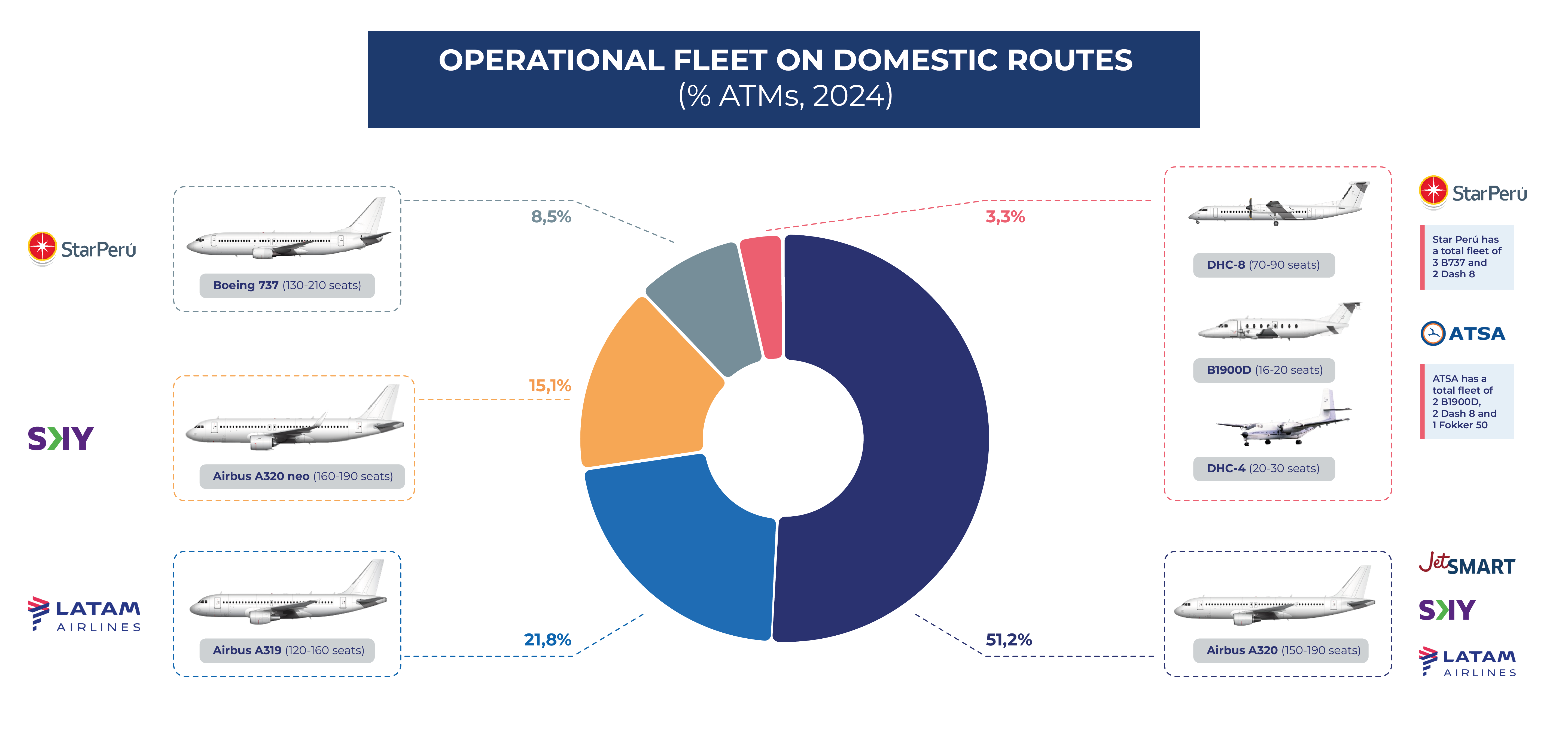
This mismatch is clearly reflected in load factors. While routes operating via Lima maintain relatively high occupancy levels, interregional routes tend to show significantly lower figures. In this context, operating high-capacity aircraft on low-demand routes directly penalizes airline economics, as the cost per passenger increases substantially. This undermines the commercial viability of new routes and, in practice, reinforces the existing centralized model rather than enabling its evolution.
Beyond operational efficiency, the territorial impact is equally important. The lack of direct connections limits the development of secondary destinations, constrains the creation of multi-destination tourism products, and ultimately restricts the country’s ability to achieve more balanced regional growth.
A latent opportunity: untapped demand and international benchmarks
Despite these constraints, the market analysis points to a clear conclusion: the limited development of interregional routes is not so much a reflection of insufficient demand, but rather of how the network is currently structured.
A number of passenger flows that today rely on connections through Lima could, under different conditions, support direct services. The analysis identifies a meaningful set of routes with both operational and economic potential, representing a combined demand, including stimulated traffic, of around half a million passengers per year.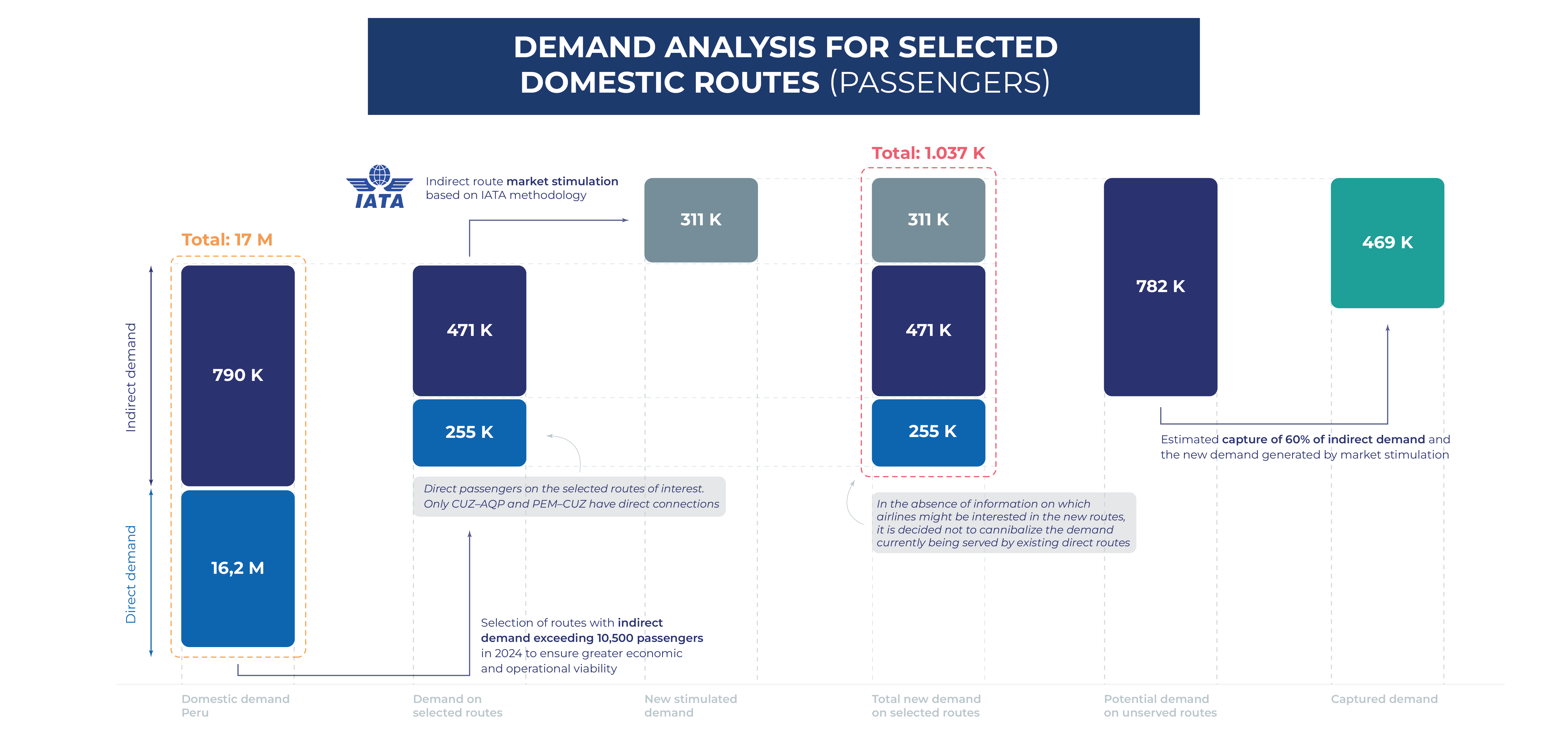
At the same time, international experience provides important context. In other Latin American markets such as Mexico and Colombia, network development initially followed a similar path, with strong concentration around a main hub. However, as traffic volumes increased and the market reached a certain level of maturity, both countries gradually shifted towards more decentralized, multi-node network structures.
This shift has been significant. Over the past decade, these markets have added a substantial number of new routes that bypass the main hub, enabling more direct regional connectivity and reducing reliance on a single gateway.
What matters here is not just the number of routes, but the underlying implication: as markets scale, the network model needs to evolve accordingly. In that sense, Peru’s current situation is less about structural limitations and more about being at an earlier stage in that transition.
Towards a new model: a more balanced and decentralized network
All indicators point to a clear opportunity to move towards a more balanced network structure, where Lima continues to play a central role, but without concentrating the majority of the country’s connectivity.
Airports such as Cusco, Arequipa, or Iquitos have the infrastructure and operational capacity to take on a more prominent role within the system, acting as regional nodes that enable more direct connections between different parts of the country.
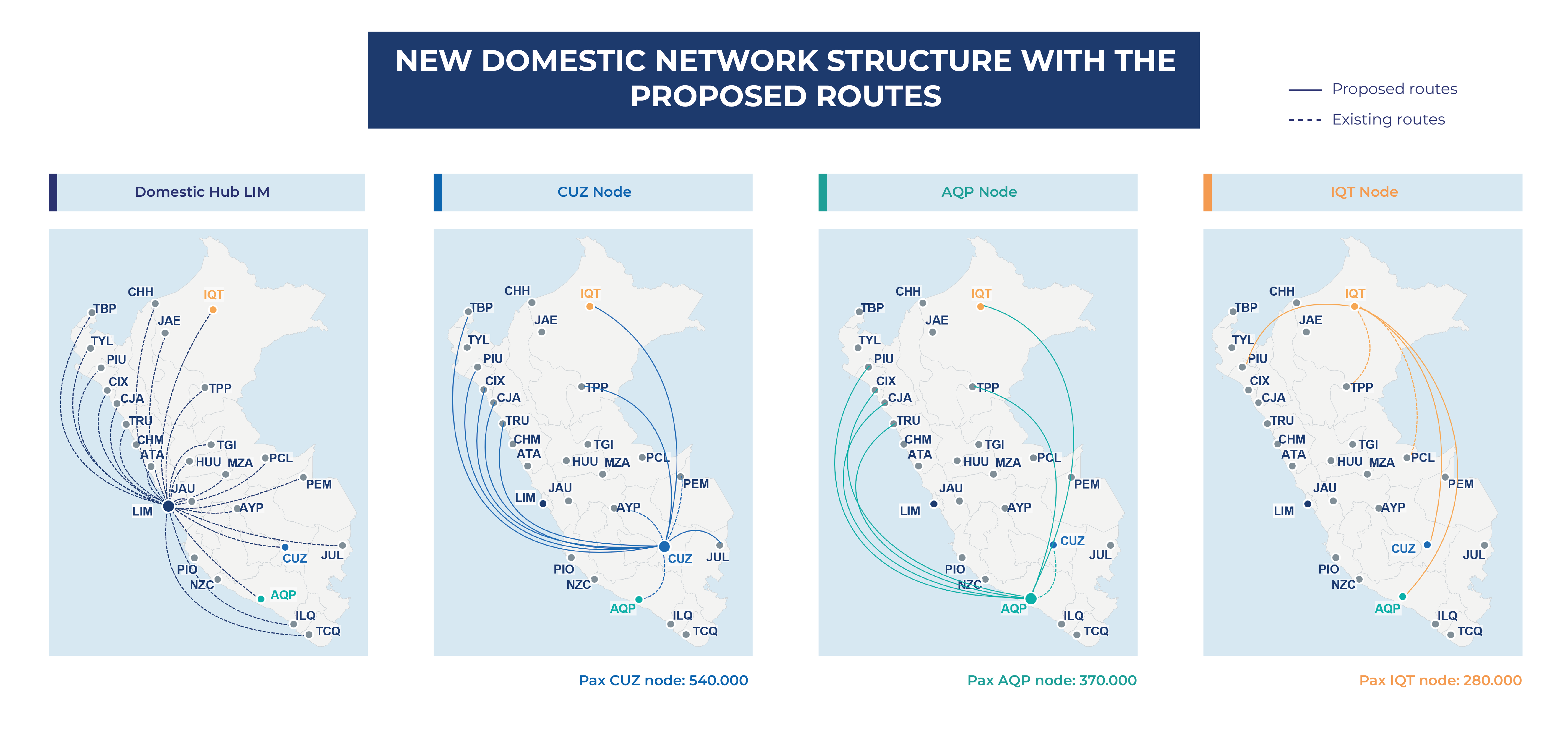 Transitioning towards this model does not require a full transformation, but rather a gradual evolution. Adjusting fleet strategy to better match demand, introducing targeted incentives to support new routes, and enhancing coordination across stakeholders are all key steps in this direction.
Rather than a disruptive change, this represents a natural progression of the network as the market continues to mature.
Conclusion: a structural shift with broader relevance
The case of Peru reflects a broader pattern commonly observed in emerging markets, particularly across Latin America. Centralized air transport systems tend to be efficient in early stages of development, but can become a structural constraint as the market grows and evolves.
When the network fails to keep pace with that growth, it begins to introduce friction, affecting not only operational efficiency but also wider economic and territorial development. At that point, connectivity may shift from being purely an enabler of growth to, in some cases, becoming a limiting factor.
In this context, the presence of untapped demand, combined with favorable operating conditions and proven examples from comparable markets, suggests that the development of interregional routes in Peru is not just a standalone opportunity but part of a broader transition towards a more mature and efficient connectivity model.
Beyond Peru, this challenge is highly relevant across the region, where many countries face the same question: how to evolve from centralized hub-based systems towards more balanced networks capable of sustaining future growth.
About the authors

Pau Calero
BEng in Aerospace Engineering with specialization in airports. Consultant at ALG, with experience in strategic airport projects, focusing on infrastructure and master planning.

Alejandro Gómez
MSc Aeronautical Engineering, BSc Business Administration. Senior Engagement Manager at ALG.


