

Road safety is entering a new era driven by the intelligent use of data. In a context where traffic is becoming increasingly complex and infrastructure is required to operate under higher levels of demand, traditional safety management approaches based on reactive measures and manual monitoring are no longer sufficient.
Today, the convergence of advanced analytics, artificial intelligence, and enhanced sensing capabilities is transforming this landscape. It is now possible to anticipate risks, detect incidents in real time, and protect both road users and maintenance crews with an unprecedented level of effectiveness. This shift marks the transition from reactive safety management to a truly proactive model, where data becomes a critical asset for saving lives and optimizing operations.
As explored in our recent paper “The future of highways: Infrastructure powered by technology”, this transformation is being accelerated by broader trends such as rising mobility demand, increasing pressure to reduce fatalities, and the growing maturity of technologies like edge computing and connected infrastructure. As a result, road operators are moving towards more predictive and automated approaches to safety.
In this context, data-driven safety management solutions are redefining how road networks are operated. From automatic incident detection to risk prediction and smart work zone protection, these technologies not only enhance response capabilities but also enable the prevention of accidents before they occur.
Focused on protecting both road users and maintenance crews, these solutions leverage real-time monitoring and predictive analytics to reduce accidents and improve response times. Thus, these tools ultimately allow operators to respond dynamically to congestion and evolving risk profiles, proactively mitigating incidents, reducing secondary events, and enhancing emergency response performance.
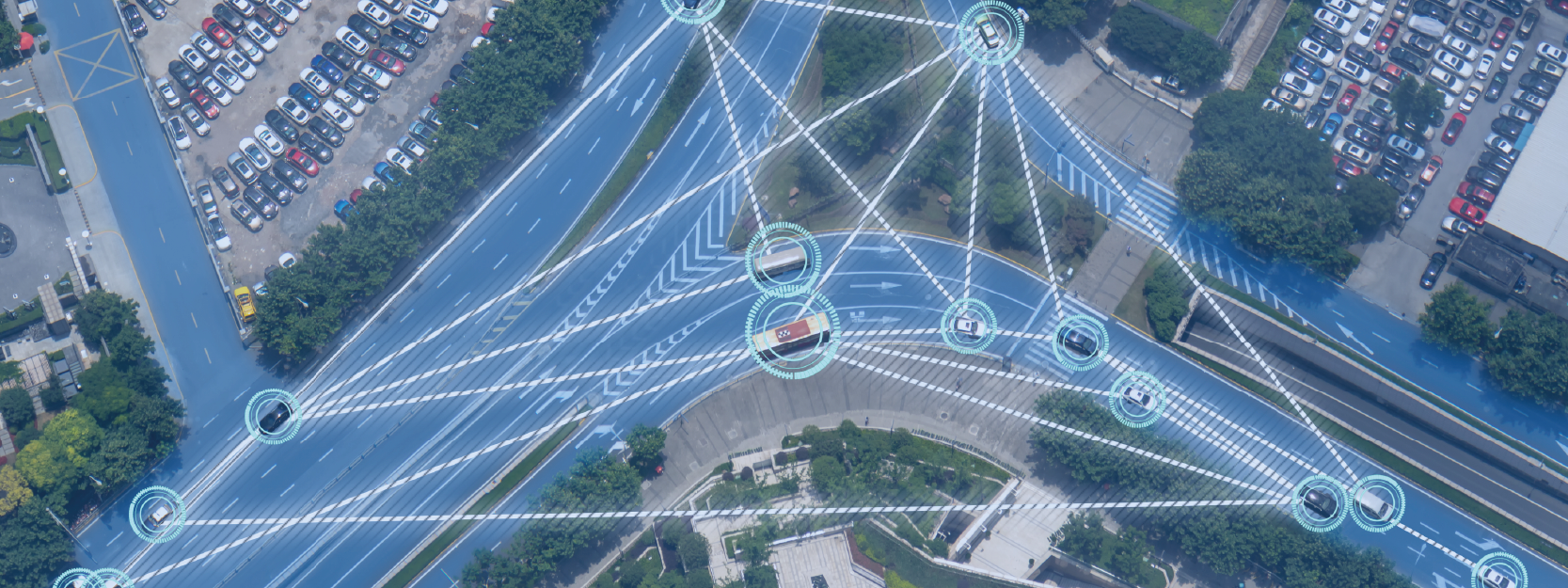
Automatic Incident Detection
Traditional incident detection methods based on manual monitoring or isolated sensors are often limited in coverage and effectiveness. Automatic Incident Detection (AID) systems address this need by enabling continuous, real-time monitoring of traffic conditions using artificial intelligence to minimize response times and reduce secondary accidents.
AID solutions analyze video streams and traffic data from roadside cameras, ITS sensors, and complementary sources such as GPS or mobility platforms to automatically identify abnormal situations, including stopped vehicles, wrong-way driving, pedestrians on the roadway, and sudden congestion. Compared to manual monitoring, AI-based detection allows incidents to be identified consistently and at scale, providing earlier alerts and optimizing operations.
Most AID solutions are software-based and deployed using edge computing architectures (without the need for cloud infrastructure), ensuring low latency and real-time performance without requiring major additional roadside investments. This represents a mature and reliable technology under live-traffic conditions, commonly used to support Traffic Management Centers by reducing detection times and enhancing situational awareness.
In practice, these systems are already deployed in real-world environments, such as high-capacity urban freeways in the United States and toll motorways in Europe, where they are fully integrated into daily traffic management operations.
Key benefits:
- Incident identification up to ~50% faster than traditional methods
- ~40% reduction in secondary crashes thanks to earlier detection
- ~15% reduction in overall crash occurrence through improved response and warning systems

AI-powered incident prediction and traffic management
Proactive traffic management requires anticipating how traffic conditions may evolve in order to mitigate congestion and prevent accidents. AI-powered prediction solutions combine artificial intelligence with digital twin models to analyze historical and real-time traffic data alongside external variables such as weather, incidents, work zones, and demand patterns.
These systems process data from sensors, cameras, GPS, connected vehicles, and other sources to identify high-risk situations before accidents occur. At the same time, digital twins enable operators to simulate scenarios and assess the potential impact of preventive measures, such as dynamic speed limits, lane management strategies, or infrastructure interventions, before implementing them.
While AI-based prediction models are increasingly integrated into traffic management systems, the use of fully operational digital twins remains limited due to challenges related to data availability and quality. As a result, these solutions are typically deployed in specific corridors rather than across entire networks.
Key benefits:
- Up to ~15% reduction in accident rates through proactive risk mitigation
- ~13.7% reduction in delays observed in AI-enabled traffic systems
- Up to 25% faster response to congestion and high-risk situations
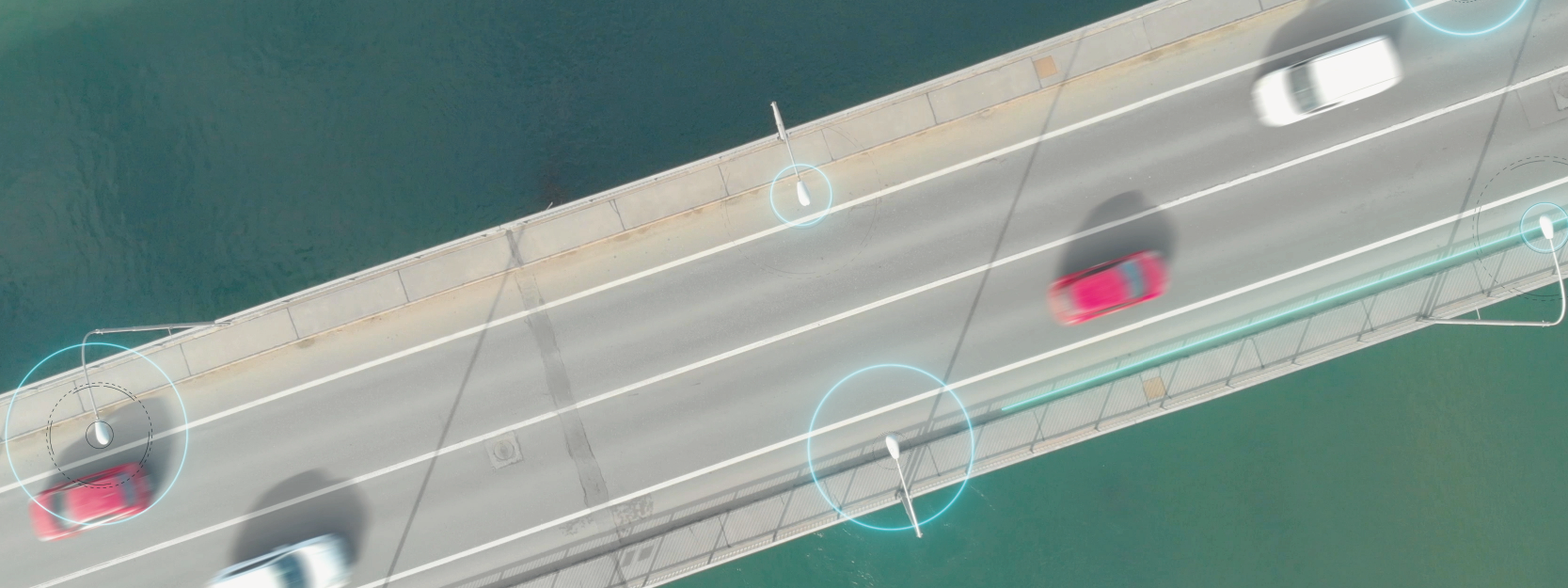
Smart work zones
Reducing accident risk in active highway work zones remains a critical priority, especially under live traffic conditions. Smart work zone safety systems address this challenge by automatically detecting vehicle intrusions and unsafe situations involving workers.
These solutions combine long-range radar with AI-based video analytics to monitor traffic and identify irregular vehicle behavior in real time. Radar enables early detection at long distances, while cameras provide short-range confirmation, ensuring reliability even in adverse weather or low-visibility conditions.
Most systems rely on edge computing to process data locally and deliver near-instantaneous alerts. Sensorized cones and mobile units define protected work areas, while additional proximity detection technologies monitor interactions between workers and machinery. Alerts are delivered directly to workers through connected wearables, enabling immediate response without manual intervention. Additionally, drivers can be alerted via V2X communication to encourage safer behavior when approaching work zones.
These systems are already deployed at scale in operational environments, demonstrating a high level of maturity and readiness for widespread adoption.
Key benefits:
- ~15% reduction in overall work zone crashes
- Up to 60% reduction in injury-related incidents within smart work zones
- ~17% reduction in vehicle speed through driver alerts
Looking ahead: from insight to implementation
Data-driven safety management is no longer a future concept, but an evolving reality across advanced road networks. Technologies such as automatic incident detection, predictive analytics, and smart work zones are already demonstrating their ability to reduce accidents, improve response times, and enhance safety for both drivers and workers.
However, their full potential lies in integration. As infrastructure becomes increasingly digital and data more accessible, the ability to build connected ecosystems capable of anticipating, simulating, and acting in real time will be critical to achieving safer and more resilient road networks. To enable a successful transition, private highway operators, Departments of Transportation, and Public Tolling Authorities should establish a Strategic Technology Plan that defines a clear and actionable roadmap for technology adoption and implementation.
This transformation does not happen in isolation. In our paper “The future of highways: Infrastructure powered by technology”, we explore in greater depth how the sector is evolving and what it takes to scale these innovations.
The paper examines the growing challenges in the highway sector and the readiness of technology to address them, highlighting how increasing operational complexity is converging with a new generation of mature, deployable solutions. It also explores a range of emerging technologies shaping the future of highways, including intelligent tolling, AI-powered road maintenance, data-driven safety and traffic management, vehicle-to-infrastructure communication, and sustainable road solutions.
In addition, it presents real-world case studies that demonstrate how these technologies are already delivering impact at scale, from dynamic tolling and HOV detection on the I-66 in Virginia, to AI-based incident detection in Greece, drone-first response programs in Portugal, smart work zones in Florida, and large-scale AI-powered inspection systems in Spain.
The question is no longer whether these solutions should be adopted, but how quickly they can be scaled. Operators that successfully bridge the gap between innovation and implementation will be best positioned to lead the transition towards safer, more efficient, and more intelligent mobility systems.
About the authors

Pau Boix
Civil Engineer with an MSc in Transport and Business Management from The Imperial College of London. Specialized in the land transport sector, including a vast experience in transaction and strategic advisory services for highway and railway assets at a global scale. Experienced in both private and public sectors, including major transport operators and transport authorities. Engagement Manager at ALG.

Miguel Armesto
Civil Engineer with an MSc in Civil Engineering and experience in transport infrastructure and transaction advisory projects, specialized in the land transportation sector. Experienced in traffic and revenue due diligence, CAPEX and OPEX assessment, and strategic advisory for toll roads, parking assets, rail, and mobility infrastructure projects. Participated in infrastructure consulting assignments supporting both public and private sector clients. Consultant at ALG.


