
In-depth insights
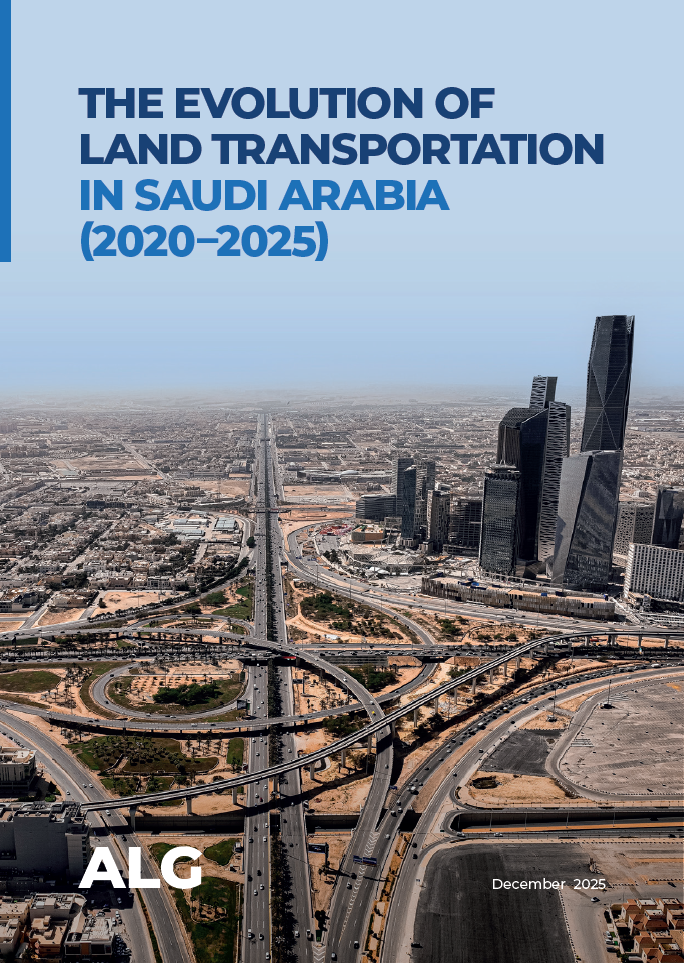
The evolution of land transportation in Saudi Arabia (2020-2025)
Since 2020, land transportation has become one of the most critical enablers of Saudi Arabia’s national transformation. In just five years, the sector has shifted from a focus on expanding physical capacity to building an integrated, digitally enabled mobility system—one increasingly defined by performance, governance, and long-term operational effectiveness.
This report examines how Saudi Arabia’s land transportation system has been reshaped between 2020 and 2025, focusing on the strategic, regulatory, and operational changes that underpin this transformation. It begins by exploring the strategic drivers behind the shift, including how national policy, institutional reform, and market design have redefined priorities across land transport.
The analysis then looks at highways, tracing the move from capacity expansion toward greater emphasis on safety, network performance, asset management, and public–private partnership (PPP) delivery models.
In parallel, the paper explores the urban mobility modernization wave, where cities are moving beyond isolated interventions toward coordinated approaches that integrate public transport, traffic management, and demand management tools.
Car parking is examined as a critical—but often underestimated—lever in shaping urban mobility outcomes, highlighting the transition from largely unmanaged supply to smart, regulated, and technology-enabled systems.
The report also assesses the intercity rail integration era, analyzing how rail investments are redefining national connectivity and their role within a broader multimodal transport network.
Finally, the paper looks ahead to what the next five years may hold, outlining the key challenges and priorities as Saudi Arabia moves from transformation toward integration and operational consolidation.
Download the full report to gain a sector-by-sector perspective on the Kingdom’s land transportation evolution—and the decisions that will shape its next phase.
See more insights